Home insulation, in the right order
Cold floors, draughty walls or a loft that is unusable in summer? We insulate roofs, lofts, floors and walls, and take care of ventilation so you do not end up with damp. As a standalone job or as part of a renovation, by one in-house team from Rotterdam, in English.
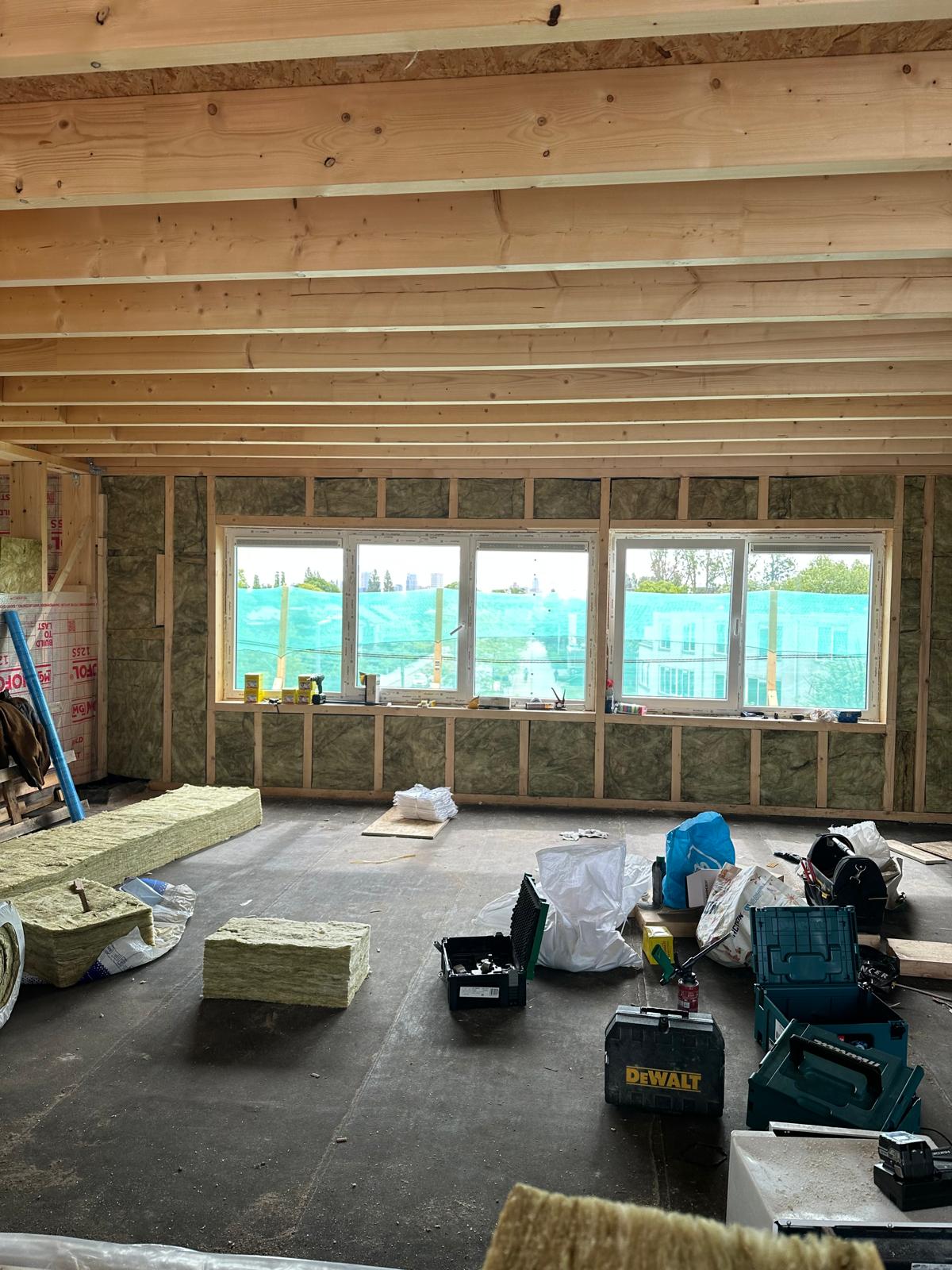
Warmer, quieter and cheaper to heat, without damp
Insulation pays off most when the measures fit together. An insulated roof above a cold, draughty floor still feels cold. An airtight house without proper ventilation becomes damp. So we look at the whole home first and advise the order that suits it: what gives the most comfort, and what can be done right away?
Many insulation jobs are standalone: a loft or roof from the inside, a floor from the crawl space, an insulated lining against a cold wall. If you are renovating anyway, we include it in the same schedule, so the house is opened up and finished only once.
Request insulation adviceOne in-house team
Our own tradespeople for insulation, carpentry and finishing. One point of contact.
A clear price up front
A quotation per measure, so you can decide what happens first.
Insulation and ventilation
With every measure we check airflow and the vapour control layer.
Help with the subsidy
We supply the invoices, photos and specifications the ISDE application needs.
Insulation in our projects
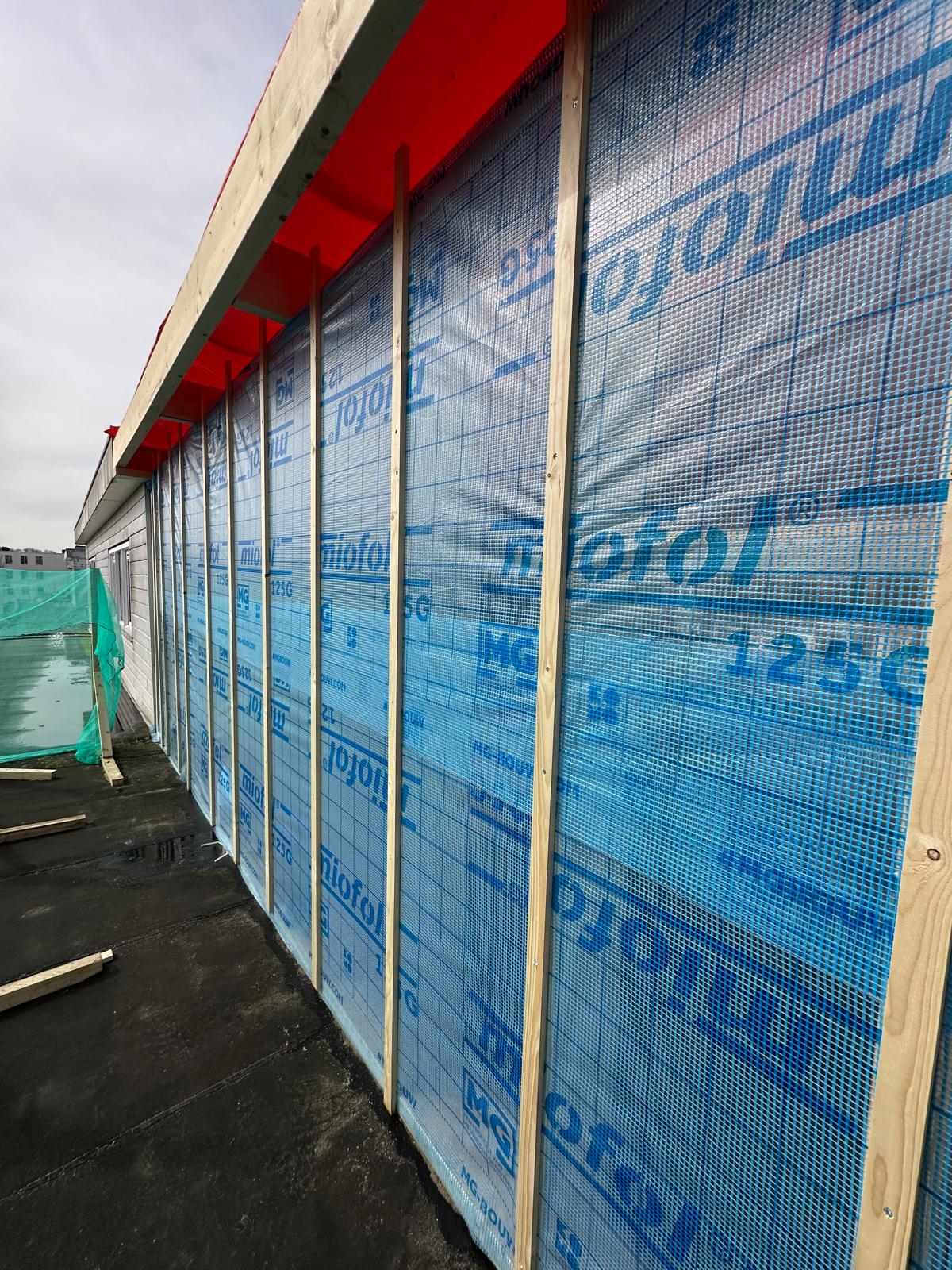
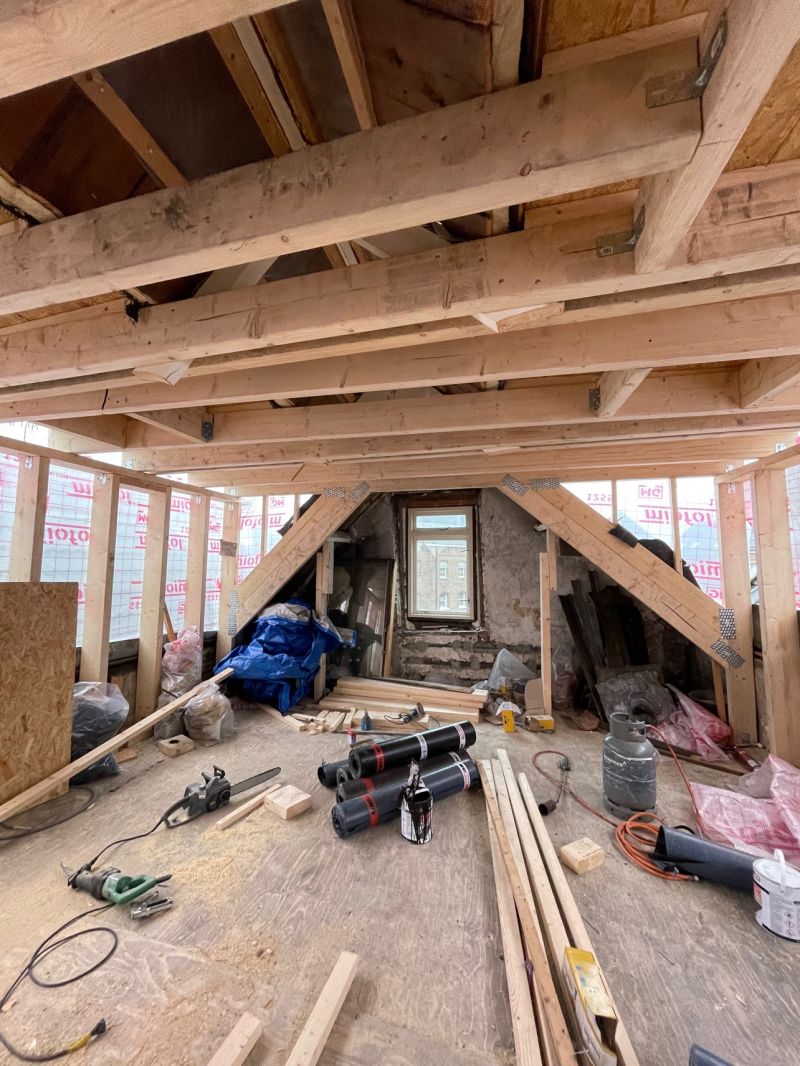
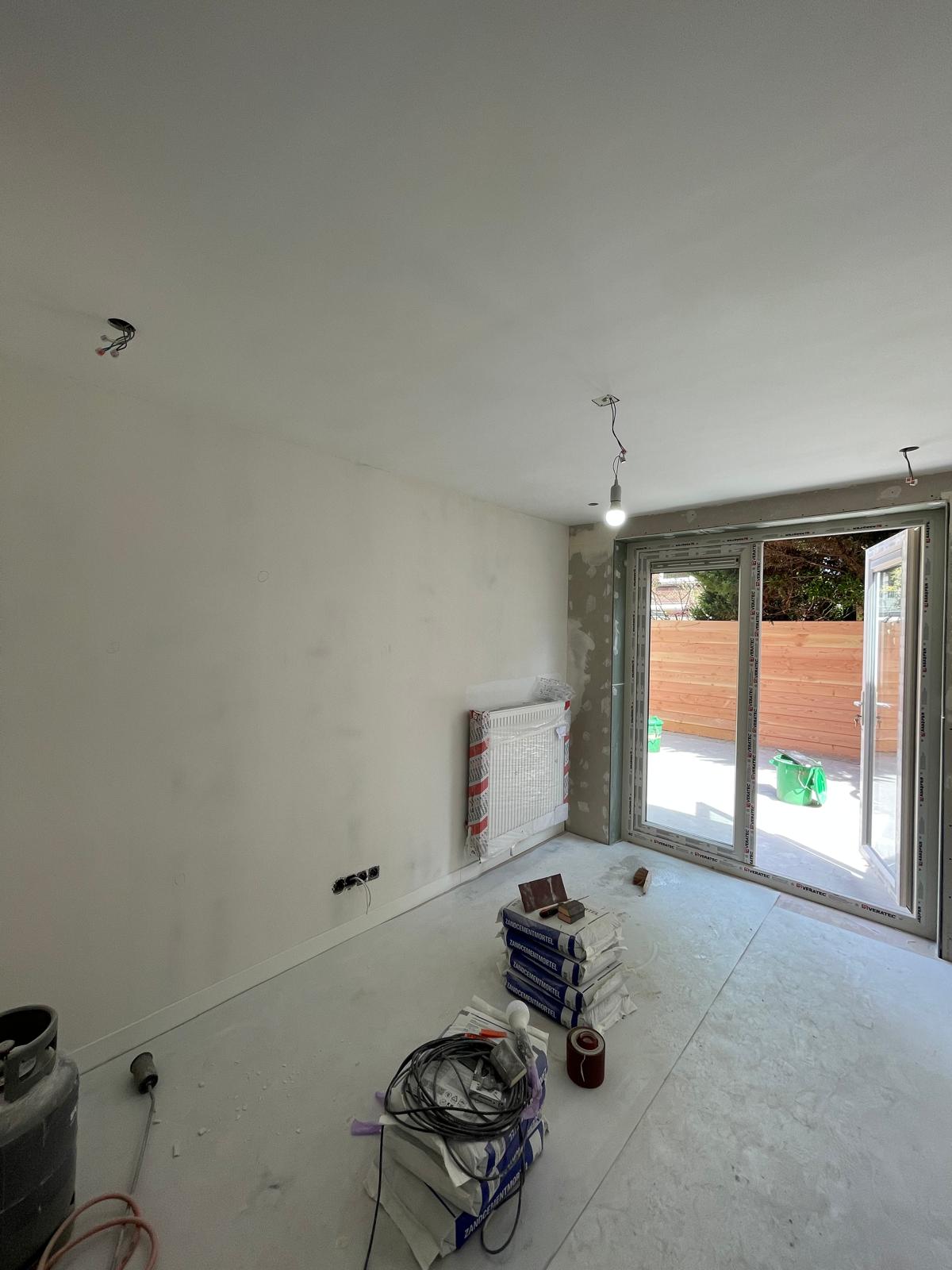
Insulation is part of almost every project we deliver. A few where it played a leading role.

What our clients say
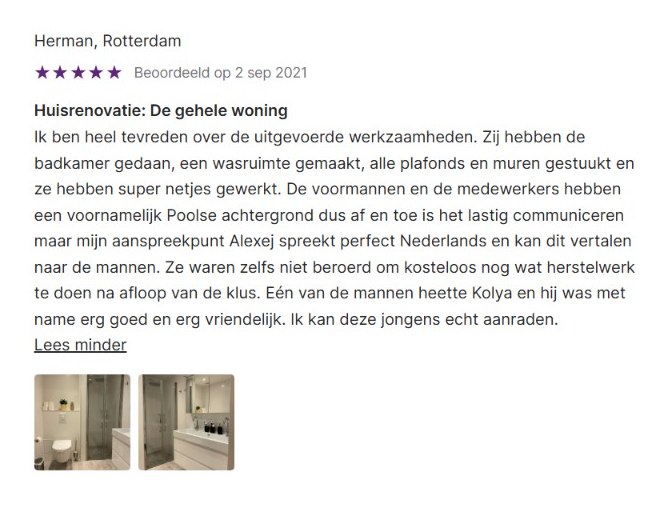






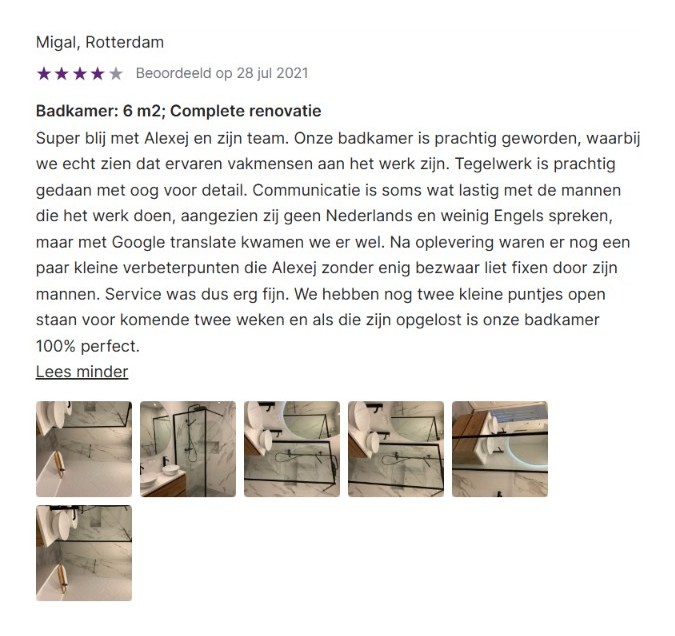



Would you like a result like this at home?
Tell us what you have in mind. You get a free quote, usually within one working day.
Every layer of your home, with the right method
For each part of the house we choose the method that suits it. Follow the links for more background.
Roof and loft
From the inside between the rafters, from the outside under new tiles, or only the loft floor.
Flat roof
Preferably on the outside, together with a new roof covering.
Floor and crawl space
Boards or spray insulation under the floor, or crawl space ground insulation if it is too low.
Cavity walls
Filling the cavity, after we have checked the facade and the pointing.
Solid walls
An insulated lining on the inside, with careful attention to damp. Read our guide on insulating old Dutch houses.
Sound insulation
Decoupled walls, ceilings and floors against noise from the neighbours, often required by the VvE.
Glazing and window frames
HR++ or triple glazing and new frames: the link most often forgotten.
Ventilation and damp
Once a house is insulated, ventilation is no longer optional.
Heat pumps
Insulate first, then change the heating. Read our heat pump guide.
How we insulate your home
Five steps, from survey to the paperwork for your subsidy application.
Survey and advice
We look at roof, floor, walls, glazing and ventilation and advise the order that pays off most.
Quotation per measure
A clear quotation per part, including the insulation value we install.
Preparation
Crawl space access, loft cleared, pipes and ventilation mapped.
Insulate and finish
Insulation, vapour control layer and finishing in one go, by our own team.
Handover and subsidy
We hand over the invoices, photos and specifications for the ISDE application.
Insulation advice for your home
Tell us briefly about your home and your plans. You get a free quote, usually within one working day, with no obligation.
- A clear price up front, extra work always agreed first
- Carried out by our own team, no subcontractors
- One year of guarantee on the work
Our own team, no subcontractors
Your entire job handled by our own 20 to 30 craftsmen. Short lines, one point of contact.
One price up front, no surprises
You know where you stand from the outset. No unexpected extra costs afterwards.
1-year guarantee on the renovation
We stand behind our work and are only finished when you are satisfied.
Which insulation pays off most in your home?
For each part of the home the method, the material and what to look out for.
Roof and loft
From inside we insulate between and below the rafters, with a vapour control layer and plasterboard. If the tiles come off, we insulate from outside. If the loft is storage only, the loft floor is the quickest win.
- Mineral wool or PIR between the rafters
- Vapour control layer on the warm side
- From outside when re-tiling
- Loft floor for a cold loft
Flat roof
Preferably on the outside, on the roof deck and under the new covering. The structure stays warm and dry and you lose no height.
- Warm roof under new covering
- Tapered insulation against ponding
- Inverted roof if the covering is sound
- Combined with replacing the covering
Floor and crawl space
From the crawl space with boards or spray foam against the underside of the floor. If the crawl space is too low or damp, insulating the crawl space floor is often better.
- Nothing changes inside
- Boards or spray foam
- Crawl space floor insulation if it is low
- Solve damp first
Cavity wall
We fill an empty cavity through small holes in the pointing, after inspecting the cavity and the pointing. You notice nothing inside.
- Camera inspection first
- Material matched to the cavity
- Pointing in order first
- Usually done in a day
Solid walls
Solid walls are insulated on the inside with a lining wall or internal insulation, with close attention to moisture and thermal bridges. Sometimes external insulation is possible.
- Lining wall with vapour control layer
- Breathable build-up for old walls
- Thermal bridges along floors and walls
- External insulation if the facade is redone
Ventilation
A well-insulated home no longer ventilates by itself. Trickle vents, extraction or a ventilation system keep the indoor climate healthy.
- Vents in the window frames
- Extraction in kitchen and bathroom
- Heat recovery in a very airtight home
- Prevents condensation and mould
Insulating different types of home
The best order and method differ per building period. This is what we see most in the Randstad.
Pre-war buildings
Solid walls, timber joists and often a historic facade. Here we insulate the roof and floor first, and choose internal insulation with a breathable build-up for the walls.
1930s homes
Often an empty cavity, a pitched roof and a timber floor over a crawl space. Cavity filling, roof insulation from inside and floor insulation is the classic combination.
Post-war terraced houses
Often partly insulated already, with a concrete floor and a flat roof on the extension. The gains are in topping up the roof and floor, and in better glazing.
Apartments
Roof and facade belong to the VvE. As an owner you mainly insulate inside: the floor above an unheated space, or a lining wall against a cold external wall.
Where insulation goes wrong
Insulation installed the wrong way costs money and can cause damp. This is what we see most, and how we prevent it.
Insulating without a vapour control layer, or with gaps in it.
We install a continuous vapour control layer on the warm side and tape joints and penetrations airtight.
Insulating a damp crawl space without solving the cause.
First clear the vents, fix leaks and measure; only then insulate.
Filling the cavity while the pointing leaks.
We inspect facade and cavity and repair the pointing before filling.
Making the house airtight without ventilating, leading to condensation and mould.
Ventilation is part of every step: vents, extraction or a ventilation system.
Installing a heat pump before the building is insulated.
We advise the order: the building fabric first, then the system.
Insulation in Rotterdam and across the Randstad
Rotterdamse Bouwbedrijf is based in Rotterdam and insulates homes across the Randstad: from pre-war buildings in Rotterdam and The Hague to post-war terraced houses in Capelle, Barendrecht and Zoetermeer. If your town is not listed, just get in touch.
And also in, among others
Questions about home insulation
Where should I start insulating?
Can I insulate without renovating?
Is there a subsidy for insulation?
Do you do cavity wall insulation?
What if my crawl space is too low or too damp?
Should I insulate first or install a heat pump first?
Can insulation cause damp?
Can a listed building be insulated?
Do you work in English?
Do you work outside Rotterdam?
Taking energy saving further?
Window frames
HR++ or triple glazing, the link most often forgotten.
Facade renovation
Repair the pointing before the cavity is filled.
Insulating a Dutch house
Our guide to insulation in Dutch homes.
Heat pumps
When a heat pump makes sense after insulating.
Full home renovation
Insulation as part of a full renovation.
Request a quote
A survey at your home and a clear price up front.
Ready to insulate your home?
Book a free survey. We look at where your home loses heat, advise the order and draw up a plan with a clear price per measure.
Insulating a Dutch home: what a contractor tells you first
Insulation is not complicated, but the details decide whether you enjoy it for decades or find mould behind the wall after two winters. These are the points we check in every home.
The order that pays off
Most homes lose most heat through the roof, then through windows, walls and floor. The logical order is therefore roof or loft, glazing, walls, floor, with ventilation at every step. Only once the shell is in order does new heating such as a heat pump make sense. See our heat pump guide.
Roof and loft
A pitched roof is usually insulated from the inside, between and under the rafters, with a vapour control layer on the warm side. If the tiles are coming off anyway, insulating from the outside with roof panels keeps the loft free. If the loft is only used for storage, insulating the loft floor is the quickest win.
Floor and crawl space
A cold floor is insulated from the crawl space, with boards between or under the joists or with spray insulation. That needs enough height. If the crawl space is too low or wet, ground insulation is often better, after the cause of the damp has been dealt with.
Walls: cavity, inside or outside
If your home has an empty cavity, filling it is usually the simplest step, once we have checked that the cavity is clean and the pointing keeps rain out. Solid walls in pre-war buildings are insulated on the inside with an insulated lining, or on the outside when the facade is being renovated. See our page on facade renovation and insulating an old Dutch house without causing damp.
Glazing and window frames
Single glazing and draughty frames undo much of the insulation elsewhere. HR++ glazing is the logical step in most homes; triple glazing needs frames designed for the weight. See window frames.
Subsidy, VAT and the energy label
Owner-occupiers can often apply for the ISDE subsidy for insulation, with minimum areas and insulation values per measure. Labour for insulating homes older than two years is charged at the reduced VAT rate. Rules change regularly, so check the current position. Better insulation also improves the energy label; see Dutch energy labels explained.
Common insulation mistakes
- Insulating without a vapour control layer or ventilation, causing condensation and mould.
- Insulating a damp crawl space before the cause of the damp is fixed.
- Filling a cavity while the pointing leaks.
- Installing a heat pump before the shell is insulated.
Renovating anyway? We include insulation in a full home renovation, a dormer or a roof extension.
What does insulation cost and what does it save?
Guide prices per square metre, including materials, labour, finishing and VAT, for Rotterdam and the Randstad in 2026. Many measures qualify for the Dutch ISDE subsidy, which comes off the price. Check the current amounts and conditions with RVO.
Cavity wall filling
Filling an empty cavity through small holes in the pointing, after inspection. You notice nothing inside.
Floor or loft floor
Floor insulation from the crawl space, or insulation on the loft floor if the loft is storage only.
Roof from inside
Insulation between and below the rafters, with vapour control layer and plasterboard. The roof stays closed.
Lining wall or roof from outside
Internal insulation of solid walls, or insulating the roof from outside while re-tiling.
| Cavity wall | Floor | Roof from inside | Lining wall | |
|---|---|---|---|---|
| Lead time, terraced house | One day | One to two days | A few days | A few days per room |
| Disruption inside | None | Hardly any | Loft temporarily unusable | Room temporarily unusable |
| Loss of space | None | None | Some height | A few centimetres per wall |
| ISDE subsidy | Possible | Possible | Possible | Possible, check RVO |